
An alkaline diet helps stabilize the body's pH, and it brings other benefits on the road to eating well. Many of the foods it recommends are rich in nutrients and low in calories. It also favors mostly plant-based, organic foods rich in vitamin C, selenium, iron and zinc. That matters because these nutrients support the health of the intestine and help strengthen the immune system.
Not eating alkaline foods, or not eating them often, can lower arachidonic acid levels and cause inflammation that is directly related to heart disease and joint pain. An alkaline diet also helps you steer clear of processed foods and refined sugars. Neither offers any nutritional benefit, and both are common causes of diet-related diseases.
The top 10 alkaline foods
- Avocado
- Garlic
- Mustard leaves
- Figs
- Ginseng
- Green tea
- Apple cider vinegar
- Almonds
- Pumpkin seeds
- Tomatoes
More alkaline foods
Vegetables: carrots, green beans, lettuce, spinach, broccoli, eggplant, peppers and onions.
Fruits: pear, apple, apricot, pineapple, banana, tangerine, berries and red fruits, cherry, grape, citrus, melon, peach, raspberry, strawberry, raisins, plums, coconut and watermelon.
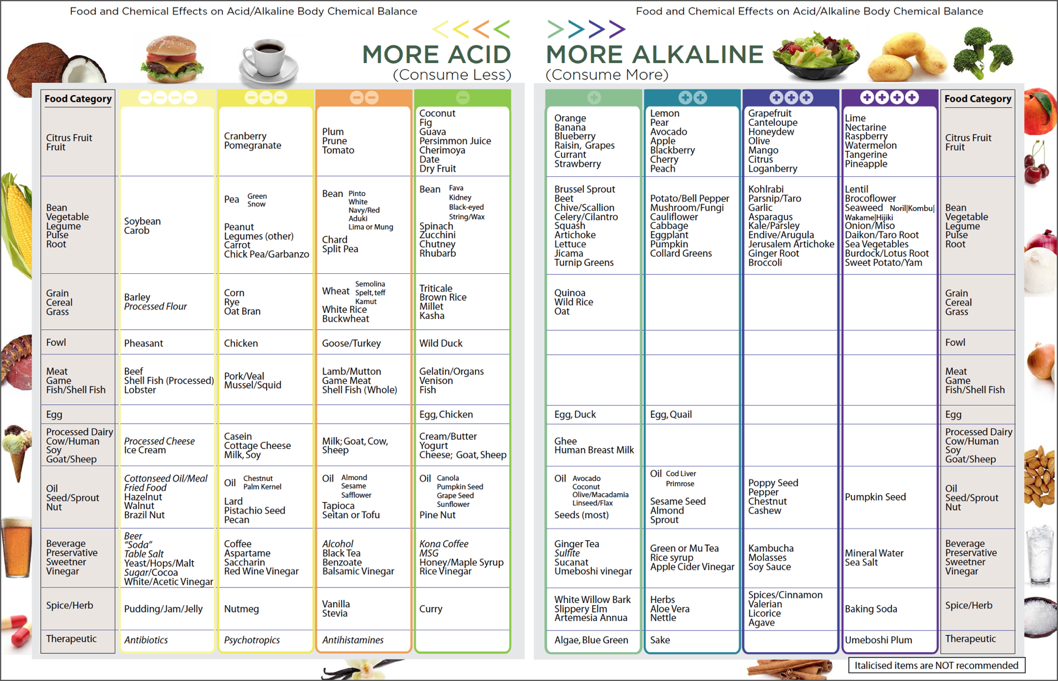
Compare the alkalinity of common foods
This table lets you compare the alkalinity of several foods we eat:
Don't forget your water
Food is only part of the picture. What you drink every day counts too. Alkanatur turns your tap water into filtered, alkaline, mineral-rich water, so every glass supports your alkaline lifestyle.


0 comments